
Stress Management and Lifestyle Medicine: 7 Ways to Support Your Mental and Physical Health | Long Health & Wellness
Practical, everyday strategies to manage stress, build resilience, and support your long-term well-being.
Have you ever had so much on your mind that it became difficult to fall asleep, prepare a healthy meal, exercise, or simply enjoy your day? You're not alone. Stress is a normal part of life, but when it becomes constant, it can start affecting how we feel, how we function, and how we care for ourselves.
While we can't always control the situations that cause stress, we can learn ways to respond to them more effectively.
Welcome back to The Physician Gardener and the Lifestyle Medicine Series at Long Health & Wellness. In this installment, Dr. Kashiti Long, a board-certified internal medicine and lifestyle medicine physician, explores the fourth pillar of Lifestyle Medicine: stress management.
From mindfulness and movement to spending time in nature and nurturing relationships, small, consistent habits can help us cope with everyday pressures and support our overall well-being.
Medical Disclaimer: This article is for educational purposes only and is not a substitute for personalized medical advice, diagnosis, or treatment. Please consult your healthcare professional about your individual health needs.
Why Stress Management Matters for Your Health
Stress is your body's natural response to a challenge or demand. In the short term, stress can be helpful. It can sharpen your attention, prepare you to respond to a difficult situation, and help you meet a deadline.
The problem often begins when stress becomes constant and you don't have enough time to recover.
Think about what happens during a particularly demanding week. You might stay up late worrying about work, skip your usual walk, rely on convenient meals, or have less patience with the people you care about. When this pattern continues, stress can make it harder to maintain the very habits that support your health.
Chronic stress is associated with changes in sleep, mood, blood pressure, and other aspects of physical health. Its effects vary from person to person, but managing ongoing stress is an important part of a proactive approach to wellness.
The goal isn't to eliminate every stressful moment. It's to build healthier ways to respond, recover, and move forward.
How Stress Can Affect Mental and Physical Health
Stress doesn't affect everyone in the same way. Genetics, life experiences, environment, physical health, and available support can all influence how a person responds.
When stress becomes persistent, it may contribute to or worsen several challenges, including:
Anxiety and low mood: Ongoing pressure can make it harder to relax, concentrate, or feel emotionally balanced.
Sleep difficulties: Worry and tension may make it difficult to fall asleep or stay asleep.
Blood pressure and cardiovascular health: Chronic stress can contribute to unhealthy blood pressure patterns and may affect other cardiovascular risk factors.
Daily habits: Stress may make regular movement, balanced eating, and consistent sleep more difficult.
Relationships and quality of life: Feeling overwhelmed can leave less energy for meaningful connection, hobbies, and activities you enjoy.
It's important to remember that anxiety, depression, heart disease, and other chronic conditions have many possible causes. Stress is one factor among several, and lifestyle changes alone aren't always enough to address these conditions.
The encouraging news? There are practical strategies you can begin exploring today.
7 Practical Ways to Manage Stress
You don't need a complicated wellness routine to get started. The most useful approach is one that fits your life and feels realistic enough to maintain.
From taking a few mindful breaths to making time for a favorite hobby, small actions can help you create moments of relief throughout your day. Here are seven strategies to explore and adapt to your own needs.
1. Practice Mindfulness and Meditation
Have you ever caught yourself replaying a conversation from yesterday or worrying about something that hasn't happened yet? When your mind keeps moving between the past and the future, it can be difficult to feel grounded in the present.
Mindfulness involves paying attention to the present moment with openness rather than immediately judging your thoughts or feelings. Meditation is one way to practice this skill.
You don't have to sit in silence for an hour to get started. Try a few minutes of quiet breathing, a guided meditation, or simply paying attention to the sights and sounds around you.
Try this: Set aside five minutes today. Sit somewhere comfortable, notice your breathing, and gently bring your attention back whenever your mind wanders. Wandering thoughts are normal. You don't need to get it perfect.
With regular practice, mindfulness may help some people manage stress and develop greater awareness of their emotional responses.
2. Use Breathing Techniques to Slow Down
When you're stressed, your breathing may become faster or more shallow. Slowing down and paying attention to your breath can be a simple way to pause and settle yourself.
One option is gentle abdominal breathing. You can try it at your desk, in your car before an appointment, or at home after a demanding day.
Here's how to begin:
Sit comfortably and relax your shoulders.
Breathe in gently through your nose, if comfortable.
Exhale slowly without forcing your breath.
Repeat for one or two minutes, keeping the rhythm comfortable.
Some people also enjoy structured breathing exercises, such as 4-7-8 breathing. However, holding your breath isn't comfortable for everyone. If it makes you dizzy, breathless, or uncomfortable, stop and return to normal breathing.
Remember: You don't need to take unusually deep breaths. Aim for slow, comfortable breathing rather than forcing a particular pattern.
3. Make Room for Creative Activities
Stress management doesn't always have to look like meditation or a formal exercise routine. Sometimes, it means doing something you genuinely enjoy.
Creative activities can give you a break from daily demands, encourage self-expression, and provide a sense of enjoyment or accomplishment.
Depending on your interests, you might try:
Dancing, including line dancing, ballroom, or simply moving to your favorite music
Painting, drawing, or photography
Playing an instrument or singing
Knitting, crafting, or gardening
Writing, journaling, or working on a creative project
You don't need to be particularly talented at any of these activities. The point isn't to produce something perfect—it's to make space for an experience that feels enjoyable and meaningful.
Try this: Choose one activity you used to enjoy or have always wanted to try. Give yourself 15 minutes this week without worrying about the outcome.
4. Move Your Body in a Way You Enjoy
Physical activity can be a valuable tool for managing stress. It offers a change of focus, supports physical health, and may improve mood and sleep.
And no, you don't have to join a gym or complete an intense workout to begin.
You could take a walk during your lunch break, stretch between meetings, try a beginner yoga class, or dance to a few songs at home. Practices such as tai chi and yoga combine movement with attention to breathing and body awareness, which some people find especially helpful.
The best activity is one that suits your abilities, preferences, and current health.
Try this: Take a 10-minute walk after work or during a break. Leave your phone in your pocket when possible and pay attention to your surroundings.
If you're new to exercise or have a medical condition that affects your activity level, start at a comfortable pace and seek guidance when needed.
5. Spend Time Outdoors and in Nature
Sometimes, a change of surroundings can help you step away from the pressures of the day.
Spending time in natural environments is associated with benefits for mood and perceived stress. You don't necessarily need a hiking trail or a weekend getaway to make it part of your routine.
Consider simple options such as:
Walking through a nearby park
Sitting outside with your morning coffee
Eating lunch outdoors when the weather allows
Spending time in your garden or caring for houseplants
Visiting a greenway, lake, or nature trail
Even a brief outdoor break can give you an opportunity to pause, move your body, and shift your attention away from whatever has been demanding it.
Try this: Step outside for five to ten minutes today. Notice the light, the sounds around you, and the feeling of the air. Let this be a small break rather than another task to complete.
6. Nurture Positive Social Connections
When life becomes stressful, it's tempting to withdraw from other people. You may feel too busy, too tired, or unsure how to explain what you're going through.
Yet supportive relationships can be an important source of comfort and resilience. Talking with someone you trust may help you feel less alone, gain perspective, or work through a difficult situation.
Connection doesn't have to mean a large social circle. One or two trusted people can make a meaningful difference.
You might:
Call a friend or family member
Take a walk with a neighbor
Join a community, hobby, or fitness group
Volunteer for a cause that matters to you
Make time for a conversation without distractions
You don't always need advice or a solution. Sometimes, having someone listen is enough to help you feel supported.
Try this: Reach out to one person this week. Send a message, schedule a call, or invite them to do something simple together.
If relationships are themselves a source of stress, consider setting healthy boundaries and seeking support from someone you trust or a qualified professional.
7. Explore Spiritual or Reflective Practices
For some people, spirituality or religious practice provides comfort, meaning, and a sense of connection during difficult times. For others, reflection, gratitude, or time spent clarifying personal values may serve a similar purpose.
There is no single approach that works for everyone. What matters is finding practices that align with your beliefs and help you feel grounded.
Depending on your preferences, you might explore:
Prayer or participation in a faith community
Quiet reflection or meditation
Writing down things you're grateful for
Reading inspirational or meaningful material
Spending time considering your values and priorities
These practices are not a substitute for professional mental health care when it's needed. However, they may be a meaningful part of a broader approach to well-being.
Try this: Set aside a few quiet minutes to reflect on what matters most to you, what has been weighing on you, and one small thing you can do to care for yourself today.
How to Find a Stress-Management Routine That Works for You
With so many options available, it's easy to feel as though you need to do everything at once. You don't.
Stress management is personal. A morning walk may help one person, while another finds relief through creative activities, meditation, time with friends, or a combination of approaches.
Instead of trying to change your entire routine overnight, start with one manageable step.
Ask yourself:
When do I feel most stressed during the day?
What helps me feel calmer or more supported?
Which healthy habit feels realistic with my current schedule?
Who can I turn to when I need support?
Choose one strategy and practice it consistently for a little while. Notice how you feel and adjust as needed.
You may find it helpful to combine several approaches over time—for example, regular movement, a consistent sleep routine, and staying connected with people you trust.
The aim isn't to create another source of pressure. It's to build habits that make caring for yourself feel more manageable.
When Is It Time to Seek Professional Support?
Lifestyle strategies can be helpful, but you don't have to manage everything on your own.
If stress is persistent, feels overwhelming, interferes with your sleep or relationships, or makes it difficult to function day to day, consider talking with your primary care physician or a mental health professional.
You may benefit from additional support if you're experiencing ongoing anxiety, persistent low mood, emotional exhaustion, difficulty concentrating, or loss of interest in activities you usually enjoy.
Depending on your needs, support may include counseling, psychotherapy, medical evaluation, medication, or a combination of approaches.
Seeking help is not a sign of failure. It's a proactive step toward caring for your health.
If you are experiencing a mental health crisis or feel you may harm yourself, seek immediate help. In the United States, call or text 988 to reach the Suicide & Crisis Lifeline. If you are in immediate danger, call 911.
Stress Management Is One of the Six Pillars of Lifestyle Medicine
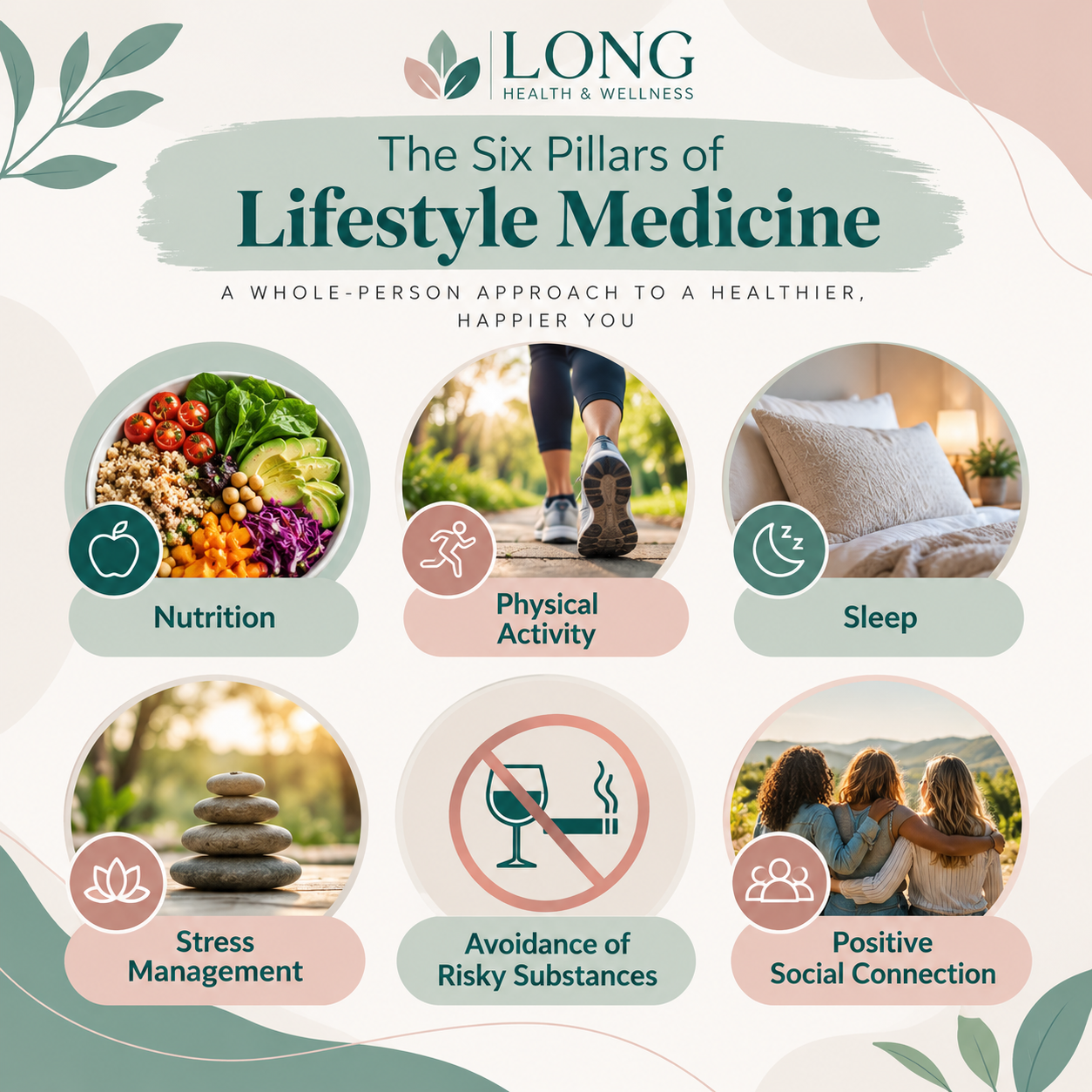
At Long Health & Wellness, we view health as more than the absence of disease. Lifestyle Medicine focuses on everyday habits that can support long-term health and work alongside appropriate medical care.
Stress management is one of six pillars:
Whole-food, plant-predominant nutrition
Regular physical activity
Restorative sleep
Stress management
Avoidance of risky substances
Positive social connection
These pillars are interconnected. When you're under stress, you may find it harder to sleep well, prepare nourishing meals, or make time for relationships. Improving one area can sometimes make it easier to care for the others.
You don't need to make every change at once. Small, sustainable steps can help you build a healthier routine over time.
The Takeaway: Start Small and Give Yourself Grace
Stress is a part of life, but it doesn't have to dictate every part of your day.
Mindfulness, comfortable breathing, creative activities, movement, time in nature, supportive relationships, and personal reflection are all approaches you can explore. You may find that one works especially well for you, or that a combination of strategies makes the biggest difference.
Start where you are. Choose one small habit. Give yourself permission to adjust along the way.
And remember: caring for your mental well-being is an important part of caring for your overall health.
Watch the Full Episode of The Physician Gardener
Want to learn more about stress management as part of Lifestyle Medicine? Watch Dr. Kashiti Long's full episode, Stress Management: Lifestyle Medicine Pillar #4, for additional guidance and practical ideas.
Follow along for more patient-friendly conversations about prevention, healthy habits, and whole-person wellness.
YouTube: Subscribe to The Physician Gardener @kashitilongmd
Instagram: Follow @kashitilongmd
Take a Proactive Approach to Your Health With Long Health & Wellness
At Long Health & Wellness, we believe healthcare should focus on more than treating illness. Dr. Kashiti Long helps adults take a proactive approach to their health through personalized primary care, prevention, and sustainable lifestyle changes.
If you'd like to learn more about our approach to healthcare in Charlotte, we'd love to connect.
📞 Call & Text: 980-272-0061
📧 Email: info@longhealthandwellness.com
https://www.longhealthandwellness.com/
You can book a FREE 15 minute call with Dr. Long to know her and explore how Long Health and Wellness may help you with your needs.
Long Health & Wellness — Building healthy lives, not just treating disease. 🌿
