
Series: The Physician Gardener | Lifestyle Medicine Pillar 5

Welcome to The Physician Gardener, the Lifestyle Medicine Series from Long Health & Wellness.
In this fifth pillar of lifestyle medicine, Dr. Kashiti Long, board-certified internal medicine and lifestyle medicine physician, explores an important part of long-term health: understanding how tobacco, alcohol, and other potentially harmful substances affect the body—and how making informed choices can help protect your well-being.
Substance use is a health issue, not a measure of character or willpower. Tobacco and alcohol can affect multiple organ systems, contribute to chronic disease, and influence sleep, mood, and overall quality of life.
The good news? You don't have to make every change overnight. Whether you're thinking about quitting tobacco, drinking less, or simply learning more about how these substances affect your health, understanding the risks is a meaningful first step.
Let's explore what the evidence tells us, why these choices matter, and where to find support if you're ready to make a change.
Watch the Episode: Avoidance of Risky Substances
Prefer to watch or listen? In this episode of The Physician Gardener, Dr. Long discusses the role of substance avoidance in lifestyle medicine and shares why tobacco use and alcohol consumption deserve attention when we talk about long-term health.
Watch the full episode below.
Why Avoiding Risky Substances Matters
Lifestyle medicine focuses on evidence-based habits that support health, help prevent chronic disease, and improve quality of life. One important part of this approach is understanding how substances such as tobacco and alcohol affect the body.
Tobacco use increases the risk of cardiovascular disease, lung disease, and several types of cancer. Alcohol can also contribute to health concerns, including liver disease, high blood pressure, certain cancers, and sleep disruption. The risks vary depending on the substance, the amount and pattern of use, and a person's overall health.
Making informed choices about substance use can help support:
Heart health: Reducing tobacco exposure and alcohol-related risks can support cardiovascular health.
Brain and mental health: Tobacco and alcohol can affect brain function, mood, and well-being.
Cancer prevention: Tobacco causes many cancers, and alcohol consumption increases the risk of several types of cancer.
Metabolic health: Substance use can affect factors involved in overall metabolic health.
Sleep and daily functioning: Alcohol may disrupt sleep, while nicotine can interfere with sleep for some people.
Long-term health: Avoiding tobacco and reducing alcohol-related risks can help lower the risk of preventable illness.
The goal isn't perfection. It's to understand the risks, make informed decisions, and seek support when a change feels difficult to make on your own.
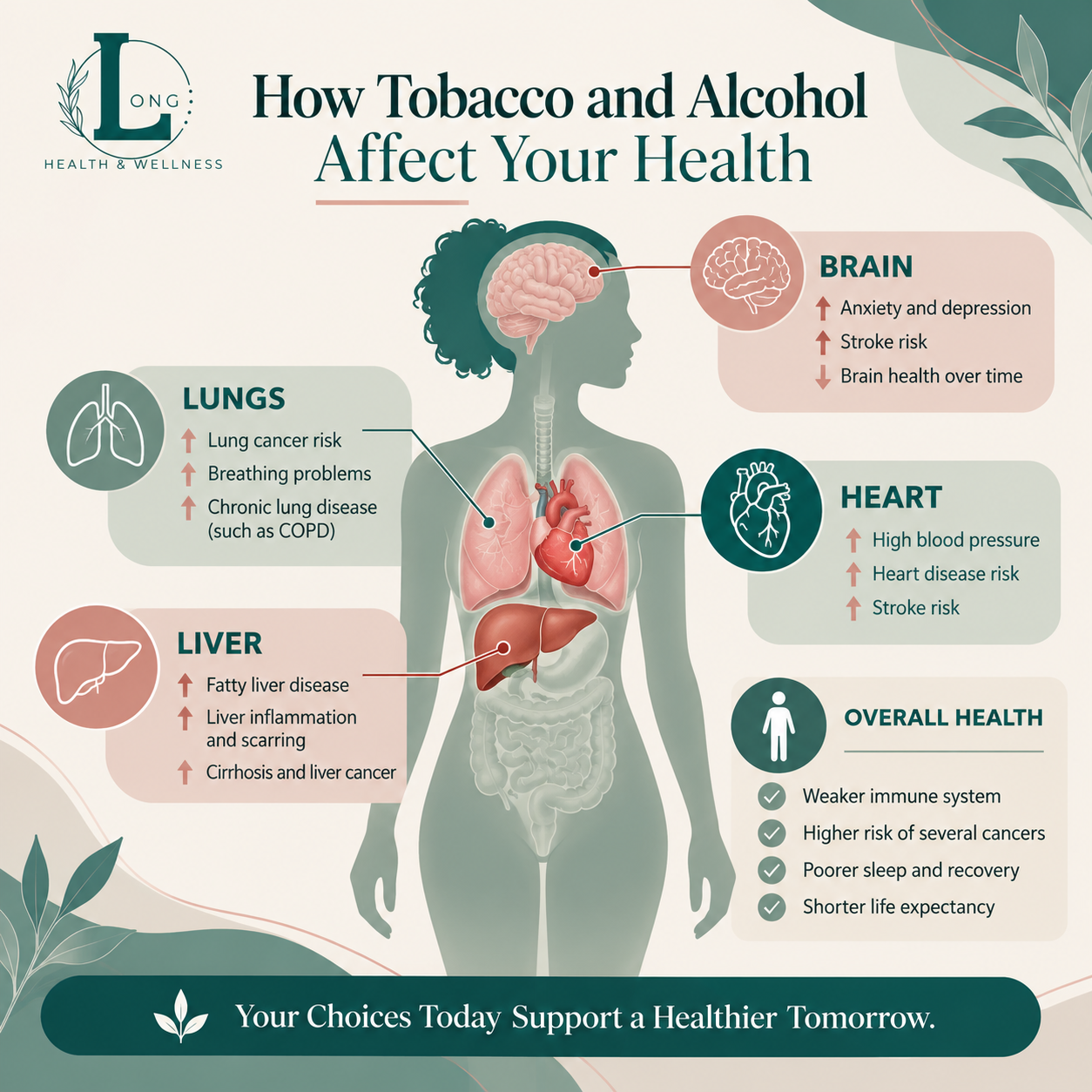
Tobacco: Understanding the Health Risks
Tobacco use affects far more than the lungs. Cigarette smoking exposes the body to harmful chemicals that can damage blood vessels, affect immune function, and increase the risk of serious chronic diseases.
Smoking is a leading cause of preventable disease and death in the United States. It increases the risk of:
Heart disease and heart attacks
Stroke
Lung cancer and other cancers
Chronic obstructive pulmonary disease (COPD) and other lung conditions
Type 2 diabetes
Rheumatoid arthritis
Reproductive and sexual health problems, including erectile dysfunction
Impaired immune function and other adverse health effects
The good news is that quitting smoking benefits your health at any age—even if you've smoked for many years.
If you smoke, you don't have to figure out how to quit on your own. Evidence-based treatments and support can help you take that next step.
The Benefits of Quitting Smoking
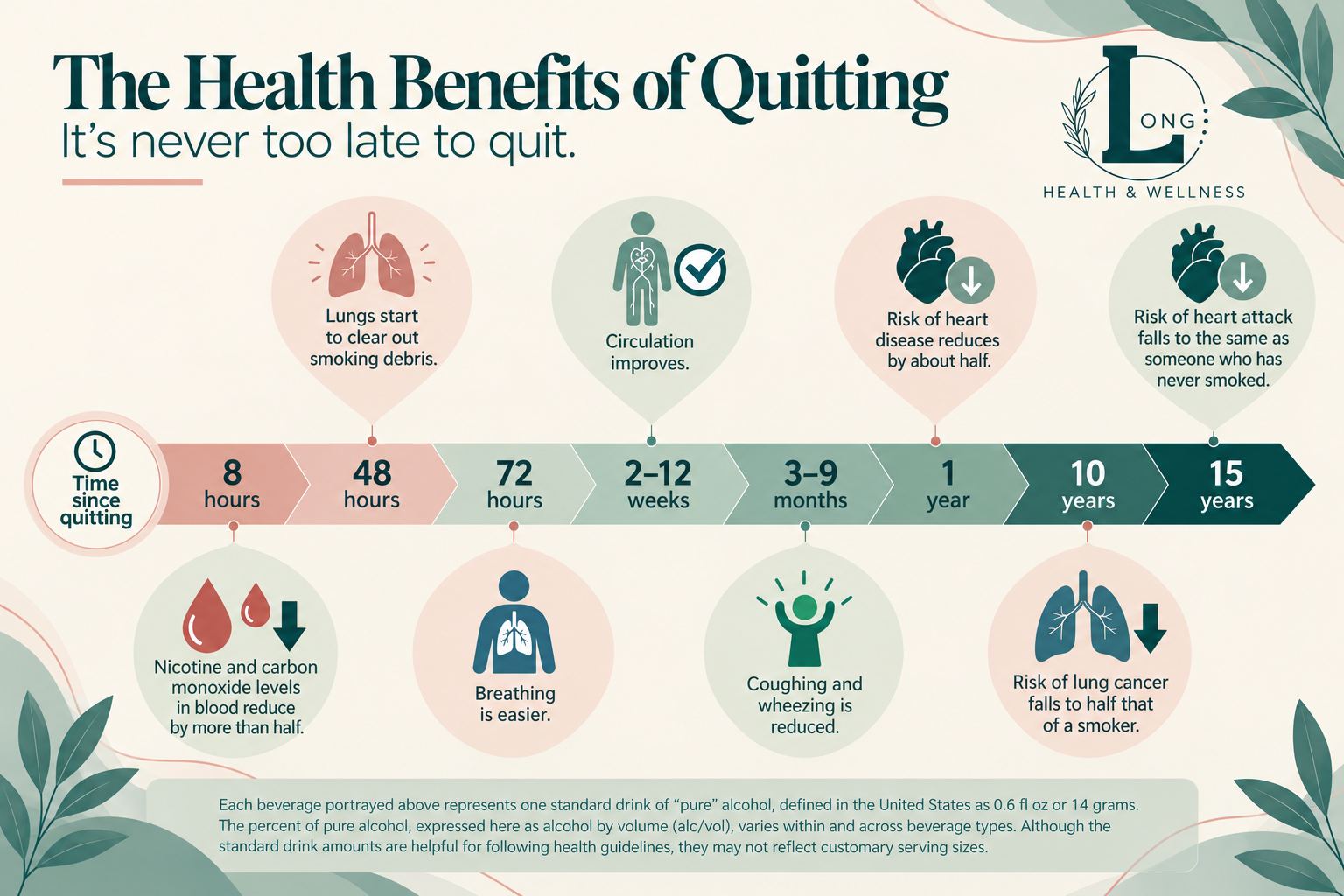
One of the most encouraging things about quitting smoking is that your body begins to recover soon after your last cigarette. The benefits continue to build over time, and quitting can improve health regardless of your age or smoking history.
Here's what that recovery can look like:
Within minutes: Your heart rate begins to drop.
Within days: Carbon monoxide levels in your blood fall toward those of someone who doesn't smoke.
Within 1–12 months: Coughing and shortness of breath can decrease.
Within 1–2 years: The risk of a heart attack drops sharply.
Within 3–6 years: The added risk of coronary heart disease drops by about half.
Within 10–15 years: The added risk of lung cancer drops by about half compared with continuing to smoke.
Quitting doesn't erase every health risk immediately, but every smoke-free day is a step toward better health.
And remember: it's never too late to benefit from quitting.
Support for Quitting Smoking
Quitting smoking can be challenging, especially when nicotine dependence, stress, or familiar routines are involved. Needing help doesn't mean you've failed. It means you're addressing a health concern that can be difficult to manage alone.
Depending on your health history and preferences, support may include:
Nicotine replacement therapy: Patches, gum, or lozenges can help manage cravings and withdrawal symptoms.
Prescription medications: Options such as varenicline (Chantix) or bupropion (Zyban; also marketed under other brand names for different indications) may help some people quit. A healthcare professional can help determine whether medication is appropriate.
Counseling and support groups: Behavioral support can help you identify triggers, develop coping strategies, and stay engaged with your quit plan.
Quitline support: In the United States, you can call 1-800-QUIT-NOW for free help with quitting tobacco.
You don't have to wait until you feel completely ready to start a conversation about quitting.
If you smoke, talk with your healthcare provider about a plan that fits your needs. If you've tried to quit before, that experience can help you identify what support might work better next time.
Alcohol: Understanding Consumption and Health Risks
Alcohol affects people differently. Its effects can depend on how much and how often someone drinks, how quickly they drink, their medical history, and whether they take medications that interact with alcohol.
Although some people may choose to drink in moderation, it's important to understand that moderation does not mean risk-free. Alcohol consumption is associated with several health concerns, including liver disease, high blood pressure, certain cancers, sleep disruption, and mental health effects.
For some people, the healthiest choice is to avoid alcohol altogether. For others, reducing how much or how often they drink may be a meaningful step toward lowering their health risks.
The goal is to understand how alcohol may affect your health and make an informed decision with that information in mind.
What Is a Standard Drink?
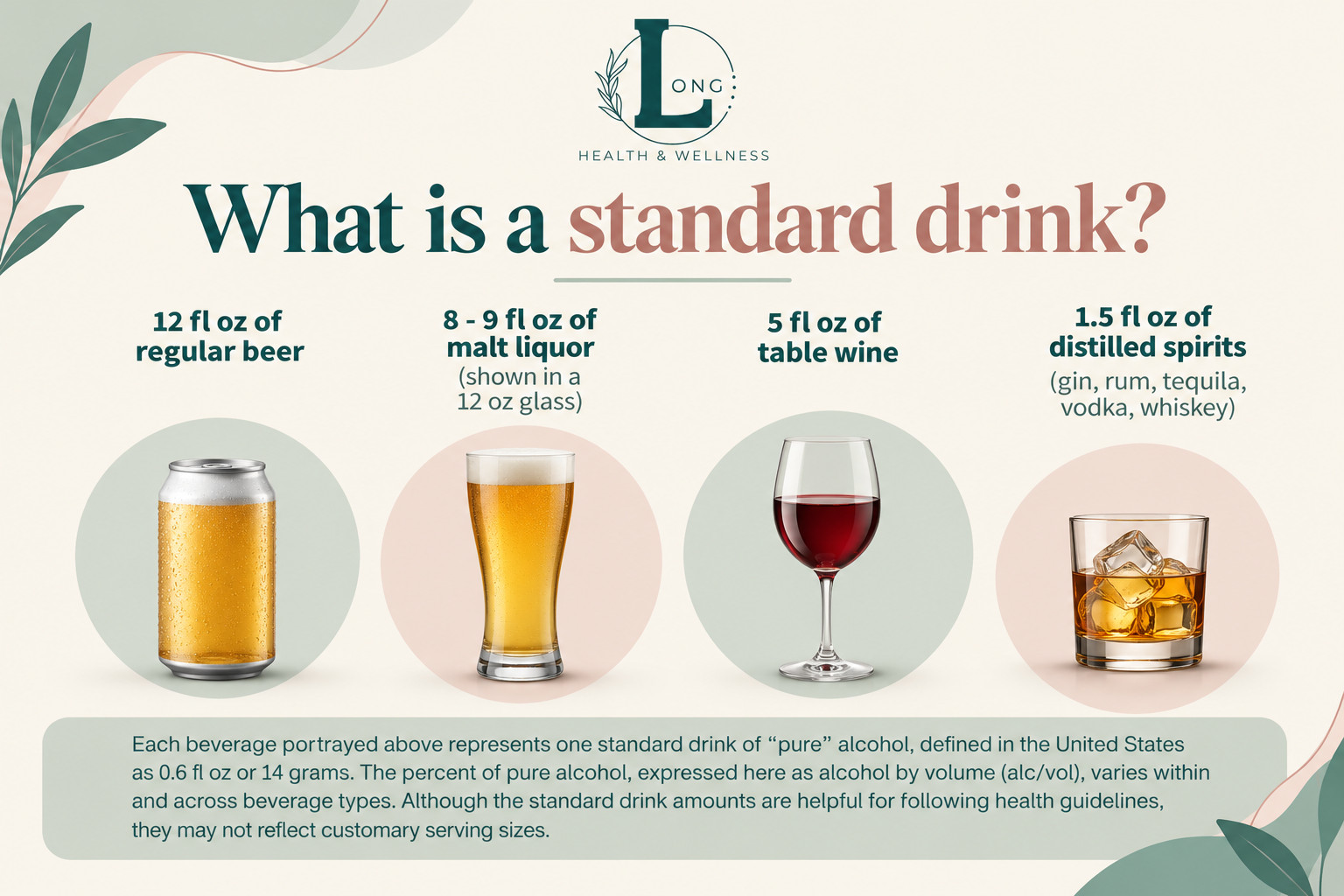
Understanding serving sizes can help you better understand how much alcohol you're consuming.
In the United States, one standard drink contains approximately 0.6 fluid ounces (14 grams) of pure alcohol. This is roughly equivalent to:
12 ounces of regular beer (about 5% alcohol)
5 ounces of wine (about 12% alcohol)
1.5 ounces of distilled spirits (about 40% alcohol), such as vodka, gin, rum, or whiskey
These are reference amounts, not necessarily the sizes served at restaurants or poured at home. A strong beer, generous wine pour, or cocktail containing multiple shots may contain more than one standard drink.
Being aware of serving sizes is one way to make more informed decisions about alcohol consumption.
Alcohol Consumption: What Do the Guidelines Mean?
For adults who choose to drink, U.S. public health guidance defines moderate drinking as:
Women: One standard drink or less in a day.
Men: Two standard drinks or less in a day.
These limits should not be interpreted as a health target or a guarantee of safety. Drinking less—or not drinking at all—can reduce alcohol-related risks. People who are pregnant, may be pregnant, take medications that interact with alcohol, have certain medical conditions, or are recovering from alcohol use disorder should avoid alcohol.
What Is Binge Drinking?
Binge drinking is a pattern of alcohol consumption that typically brings blood alcohol concentration to 0.08% or higher. For a typical adult, this corresponds to:
Women: Four or more standard drinks in about two hours.
Men: Five or more standard drinks in about two hours.
These thresholds are used for public health definitions; alcohol can impair judgment and coordination at lower amounts, too.
What Is Heavy Drinking?
Common U.S. public health definitions identify heavy drinking as:
Women: Eight or more drinks per week.
Men: Fifteen or more drinks per week.
These categories are useful for recognizing patterns that may increase health risks. They are not the only indicators of a problem, and a person can experience alcohol-related harm without meeting a particular threshold.
If you're concerned about your drinking, you don't need to wait until it meets a formal definition of heavy drinking to discuss it with a healthcare professional.
How Alcohol Can Affect Your Health
Alcohol can affect multiple body systems, and the risks generally increase as consumption increases. Even when drinking doesn't seem to cause immediate problems, it can still influence health over time.
Potential health effects include:
Liver health: Increased risk of fatty liver disease, alcohol-associated hepatitis, and cirrhosis.
Heart health: Increased risk of high blood pressure and other cardiovascular problems.
Cancer risk: Increased risk of several cancers, including cancers of the breast, liver, mouth, throat, esophagus, and colorectum.
Brain and mental health: Effects on judgment, memory, mood, and mental well-being.
Sleep: Disrupted sleep quality, even when alcohol initially makes you feel sleepy.
Metabolic and general health: Effects on appetite, daily functioning, and other health-related behaviors.
The degree of risk varies from person to person. Your medical history, medications, drinking pattern, and other factors all matter.
If you notice that alcohol is affecting your sleep, mood, relationships, or ability to manage your health, that is a valid reason to seek support even if you don't think you drink heavily.
Alcohol Use Disorder: When to Seek Help
Alcohol Use Disorder (AUD) is a medical condition that can affect a person's health, relationships, work, and daily life. It is not a moral failure, and people experiencing it deserve compassionate, evidence-based care.
Recognizing the signs can be an important first step toward getting support.
You may want to speak with a healthcare professional if you:
Often drink more, or for longer, than you intended.
Have tried to cut back but found it difficult.
Experience strong cravings or feel that alcohol has become difficult to control.
Continue drinking despite effects on your health, mood, relationships, or responsibilities.
Spend a significant amount of time drinking or recovering from its effects.
Need to drink more to experience the same effect.
Experience symptoms such as shaking, sweating, anxiety, or nausea when alcohol wears off.
You don't need to experience every sign to benefit from a conversation with your healthcare provider.
If you're concerned about your relationship with alcohol, asking for help is a positive step toward protecting your health—not something to feel ashamed of.
An Important Safety Note About Alcohol Withdrawal
If you drink heavily or regularly and may be physically dependent on alcohol, do not stop drinking abruptly without medical guidance. Alcohol withdrawal can be dangerous and, in some cases, life-threatening.
Symptoms can include shaking, sweating, nausea, anxiety, and a rapid heartbeat. Severe withdrawal can cause seizures, hallucinations, or delirium.
If you think you may be dependent on alcohol, contact a healthcare professional to discuss a safe plan for reducing or stopping your alcohol use. Medically supervised treatment can help manage withdrawal and reduce complications.
Seek emergency medical care if someone experiencing possible alcohol withdrawal develops a seizure, severe confusion, hallucinations, or other severe symptoms.
You deserve support throughout the process, and you do not have to navigate it alone.
Finding Support for Alcohol-Related Concerns
There is no single path to changing your relationship with alcohol. The right support depends on your health, circumstances, goals, and the level of care you need.
Options may include:
Primary care: Your healthcare provider can discuss your drinking pattern, assess potential health effects, and help you identify appropriate next steps.
Addiction medicine or behavioral health professionals: Specialists can provide assessment, counseling, and treatment tailored to your needs.
Peer support groups: Programs such as Alcoholics Anonymous offer opportunities to connect with others working toward recovery.
Community and faith-based support: For those who find it helpful, trusted community or faith-based groups can provide additional encouragement.
Online recovery resources: Remote counseling and structured support programs may make care more accessible.
Evidence-based treatment: Depending on your situation, treatment may include behavioral therapies, medications, or medically supervised withdrawal management.
Seeking help doesn't mean you have to have everything figured out. A conversation with a qualified healthcare professional can help you understand your options and choose a safe next step.
Lifestyle Medicine: A Whole-Person Approach to Health
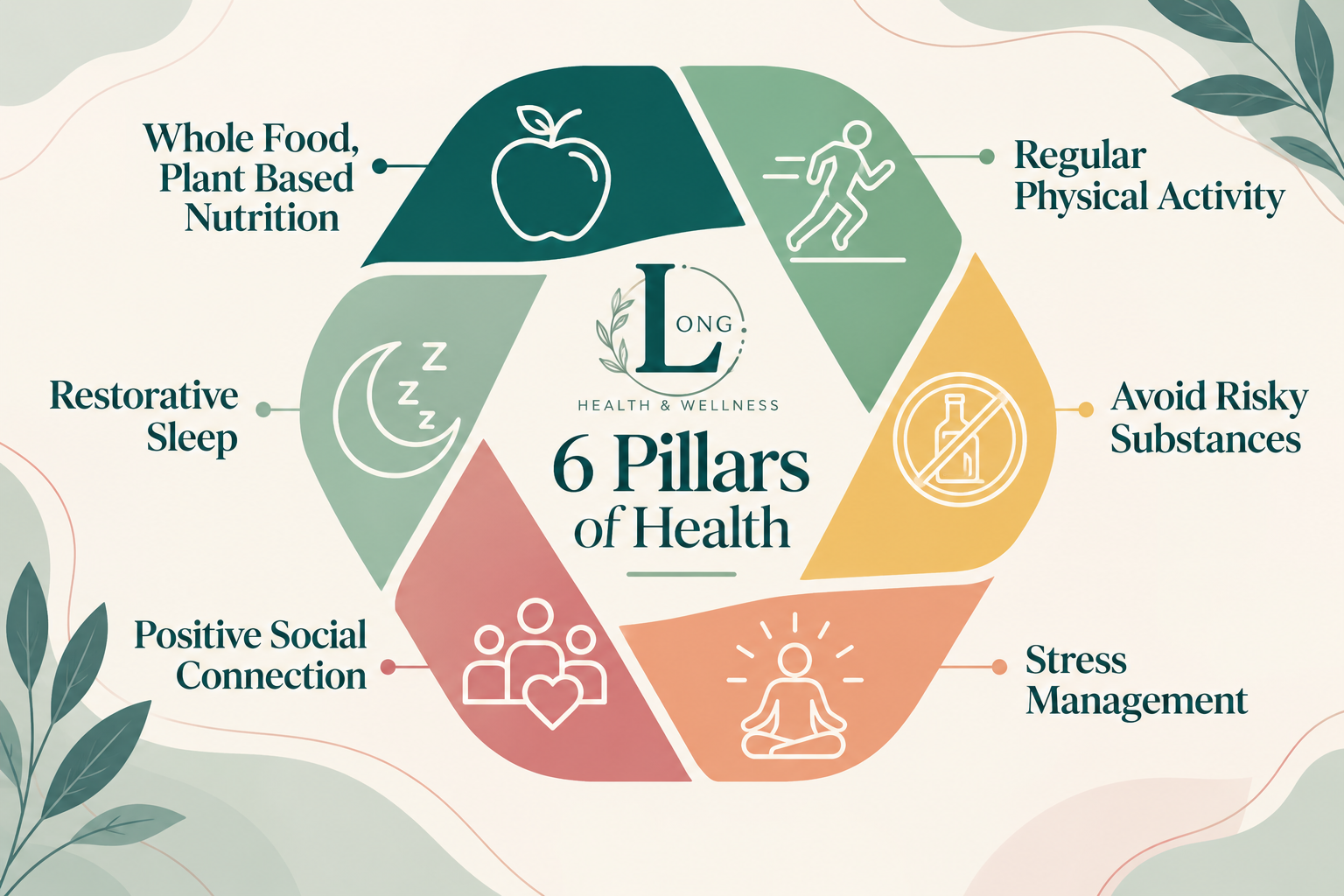
Avoidance of risky substances is one of the six pillars of lifestyle medicine. It works alongside other evidence-based habits that help support overall health and well-being.
The six pillars are:
Nutrition: Nourishing your body with balanced, nutrient-rich foods.
Physical activity: Moving regularly in ways that fit your abilities and daily life.
Restorative sleep: Building habits that support consistent, quality sleep.
Stress management: Developing healthy ways to respond to life's challenges.
Avoidance of risky substances: Avoiding tobacco and other harmful substances, and making informed decisions about alcohol.
Positive social connection: Building supportive relationships and meaningful connections.
These pillars are interconnected. For example, stress can influence substance use, alcohol can interfere with sleep, and supportive relationships can make behavior changes feel more manageable.
At Long Health & Wellness, we believe health is about more than a single habit or isolated symptom. Understanding your health history, daily routines, challenges, and support systems can help you identify realistic steps toward better well-being.
And if changing substance use feels difficult, remember that lifestyle medicine can work alongside appropriate medical treatment and professional support.
Your Health Is Worth Protecting
Changing a long-standing habit can feel difficult, especially when it has become part of your daily routine or a way of coping with stress. You don't have to make every change at once, and you don't have to do it alone.
If you've been thinking about quitting tobacco or changing your alcohol use, consider starting with a conversation with your healthcare provider. Together, you can explore your health risks, identify the support you need, and create a plan that fits your circumstances.
Small, informed steps can be the beginning of meaningful change. What matters is finding a path that supports your health and is safe for you.
The Bottom Line
Avoiding risky substances is an important part of protecting your long-term health. Tobacco use can increase the risk of serious disease, and alcohol can affect everything from sleep and mental well-being to liver health and cancer risk.
The good news is that support is available. Whether your next step is learning more, quitting tobacco, reducing alcohol use, or seeking help for a substance-related concern, you deserve care that is compassionate, evidence-based, and tailored to your needs.
At Long Health & Wellness, we believe prevention starts with understanding your health and making informed decisions that support your well-being over time.
You don't have to change everything today. Start with a conversation, a question, or one safe step forward.
🌿 Prevention is powerful.
🌿 Your health is worth protecting.
🌿 Support is available when you're ready.
Continue the Conversation
Watch the full episode of The Physician Gardener with Dr. Kashiti Long to learn more about avoidance of risky substances and the role it plays in lifestyle medicine.
Have a question about this topic? Leave a comment below. Your question may also help someone else learn something important about their health.
Stay connected with Long Health & Wellness:
Subscribe to The Physician Gardener on YouTube.
Follow @ThePhysicianGardener on Instagram.
Explore more educational resources from Long Health & Wellness.