
Physical Activity vs Exercise: Lifestyle Medicine Pillar #2 + Weekly Exercise Guidelines | Long Health & Wellness
Physical Activity vs. Exercise: What’s the Difference?
Not all movement is exercise—and understanding the difference can help you build a healthier, more sustainable routine.
Medical Disclaimer: Dr. Long is a physician, but this content is for educational purposes only and does not replace personalized medical advice. Consult your own healthcare professional before making changes to your exercise or health routine.
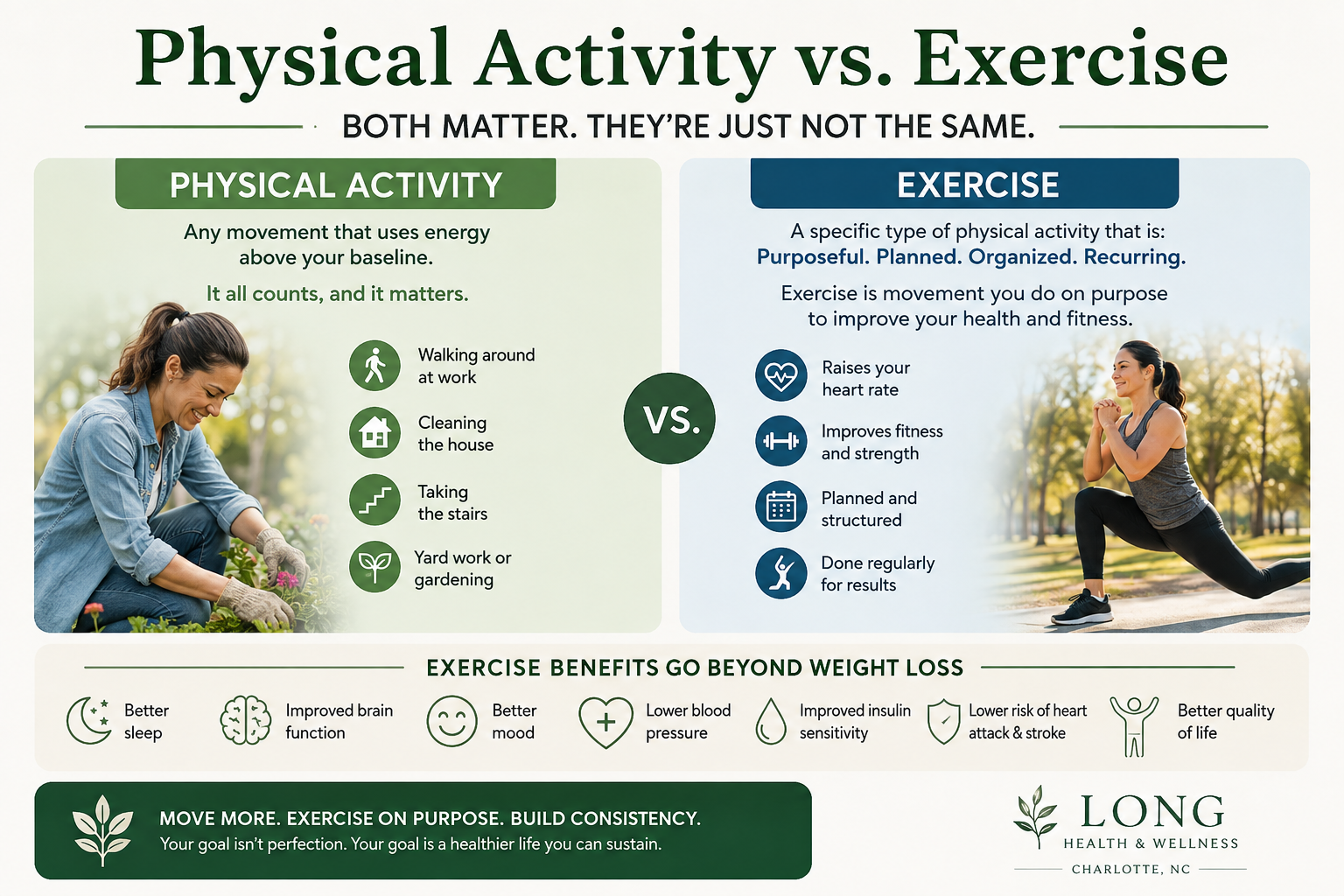
What Is Physical Activity?
Physical activity is any movement that causes your body to use more energy than it does at rest.
It can happen throughout your normal day, including:
🚶 Walking around at work
🧹 Cleaning the house
🪜 Taking the stairs
🌱 Gardening or doing yard work
It all counts.
This is a great place for a lifestyle photo of someone gardening, walking, taking stairs, etc.
What Is Exercise?
Exercise is a planned, purposeful, and structured form of physical activity designed to improve or maintain your physical fitness.
Think:
Purposeful → Planned → Structured → Repeated
Examples include:
Brisk walking
Cycling
Swimming
Strength training
Jogging
Yoga
Mobility training
💡 A Common Misconception
“I exercise all day. I’m on my feet at work!”
Being on your feet and moving throughout your workday absolutely contributes to your overall physical activity.
But it doesn't necessarily mean you're getting structured exercise that challenges your cardiovascular system, strength, balance, or flexibility.
Being active is great. But being active and exercising aren't always the same thing.
What Is “Fitness” (and Why Does It Matter)?
Fitness is one of the outcomes we can develop through regular exercise.
It includes:
Cardiovascular endurance
Muscle strength
Muscular endurance
Balance
Flexibility
Body composition
Just being active at work doesn’t always improve these areas—structured exercise usually does.
How Hard Should You Be Exercising?
You don't always need a heart-rate monitor to get a sense of exercise intensity. Try the talk test:
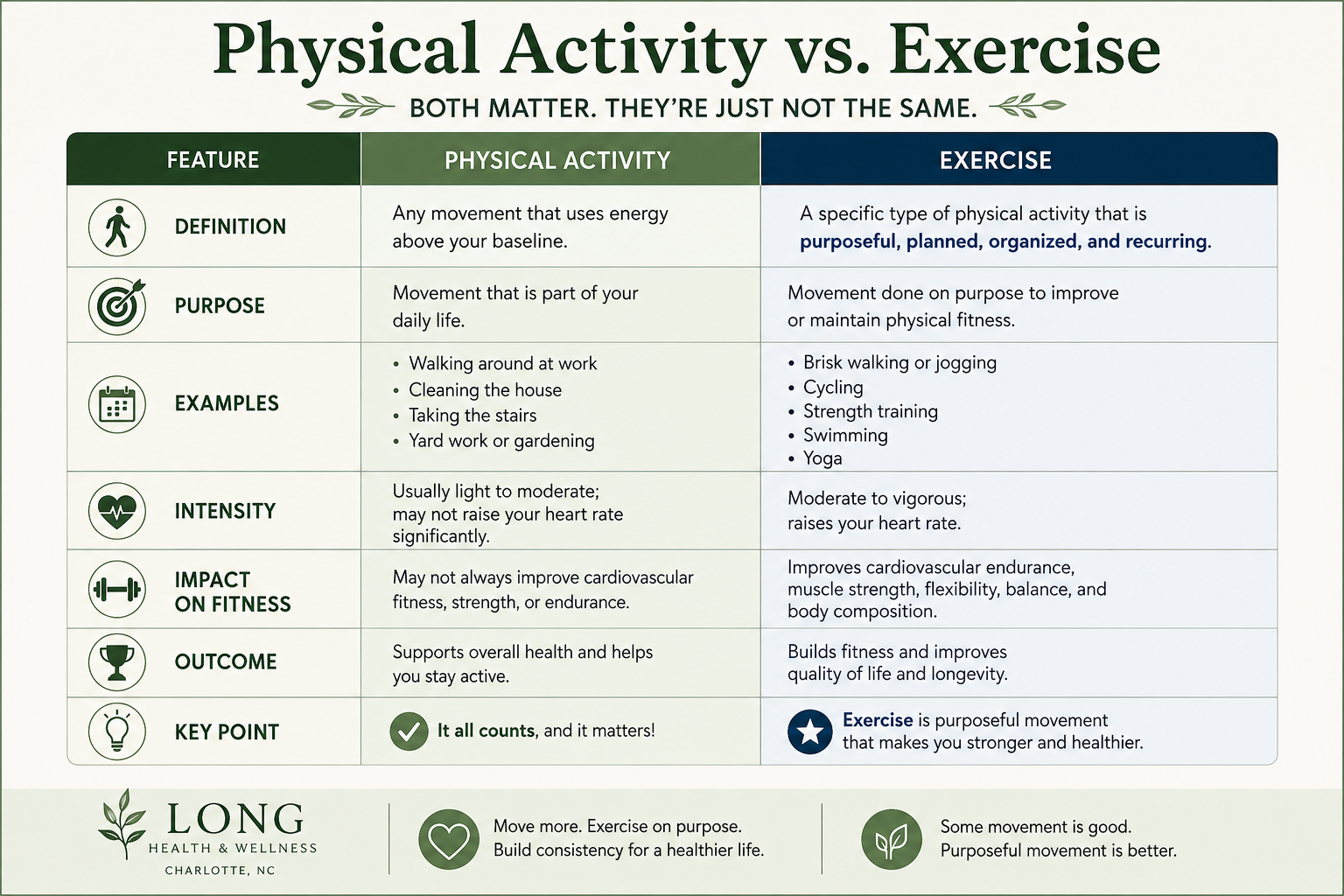
Physical Activity vs. Exercise comparison table showing differences, examples, and health benefits.
How Much Exercise Do You Need?
For general health, adults should aim for:
150 minutes
of moderate-intensity aerobic activity per week
OR
75 minutes
of vigorous-intensity aerobic activity per week
And ideally, spread activity across several days.
Don't Let Perfect Become the Enemy of Good
If you're not exercising regularly right now, don't feel like you need to immediately reach 150 minutes.
Start where you are. Build gradually.
Some movement is better than none.
Build a Well-Rounded Exercise Routine
Try to include three major components:
❤️ Aerobic
Walking, cycling, swimming, jogging
💪 Strength
Resistance training 2–3 days per week
🧘 Balance + Flexibility
Stretching, yoga, mobility exercises
This section would look great as three side-by-side cards on desktop.
Starting a New Exercise Routine? Start Low and Go Slow.
You don't have to transform your entire lifestyle overnight.
Instead:
Start with something realistic.
Choose an activity you can actually see yourself doing consistently.
Build gradually.
Give your body time to adapt.
Focus on consistency.
An exercise routine you can maintain is more valuable than an extreme routine you abandon after two weeks.
A sustainable routine beats an extreme routine every time.
Set a FIT Goal
Dr. Long recommends using a simple framework to make exercise goals more specific:
F — Frequency
How often will you exercise?
I — Intensity
How hard will you work?
T — Type
What activity will you do?
T — Time
How long will each session last?
Example
Instead of:
“I need to exercise more.”
Try:
“I will walk for 15 minutes, three days a week, at a comfortable pace.”
Even better, choose the specific days and time you'll do it.
The more specific your goal, the easier it becomes to turn it into a habit.
Exercise Is About Much More Than Weight Loss
Exercise can support:
Better sleep
Improved mood
Brain health and cognitive function
Healthy blood pressure
Improved insulin sensitivity
Cardiovascular health
Lower risk of chronic disease
Better quality of life as you age
And Here's Something Important:
You can experience meaningful health benefits from exercise even if the number on the scale doesn't change.
The Bottom Line
You don't have to become a marathon runner or spend hours in the gym to become healthier.
Start by moving more.
Then add purposeful exercise.
And focus on building a routine you can maintain for the long run.
Move more. Exercise on purpose. Build consistency.
Your goal isn't perfection.
Your goal is a healthier life you can sustain. 🌿
Want to Take a More Proactive Approach to Your Health?
At Long Health & Wellness, Dr. Kashiti Long takes a lifestyle-medicine approach to helping patients build healthier lives—not just treat disease.
Whether you're looking to improve your fitness, manage your weight, improve your overall health, or create sustainable lifestyle changes, having the right guidance can make the process easier.
💬 DM us to learn more
📞 980-272-0061
📧 info@longhealthandwellness.com
Long Health & Wellness | Charlotte, NC