
Whole Foods Plant-Based Diet for Beginners: A Guide to Lifestyle Medicine Nutrition
Welcome to the Lifestyle Medicine Series
Nutrition plays a powerful role in our overall health—but healthy eating doesn't have to mean following a complicated diet or giving up everything you enjoy.
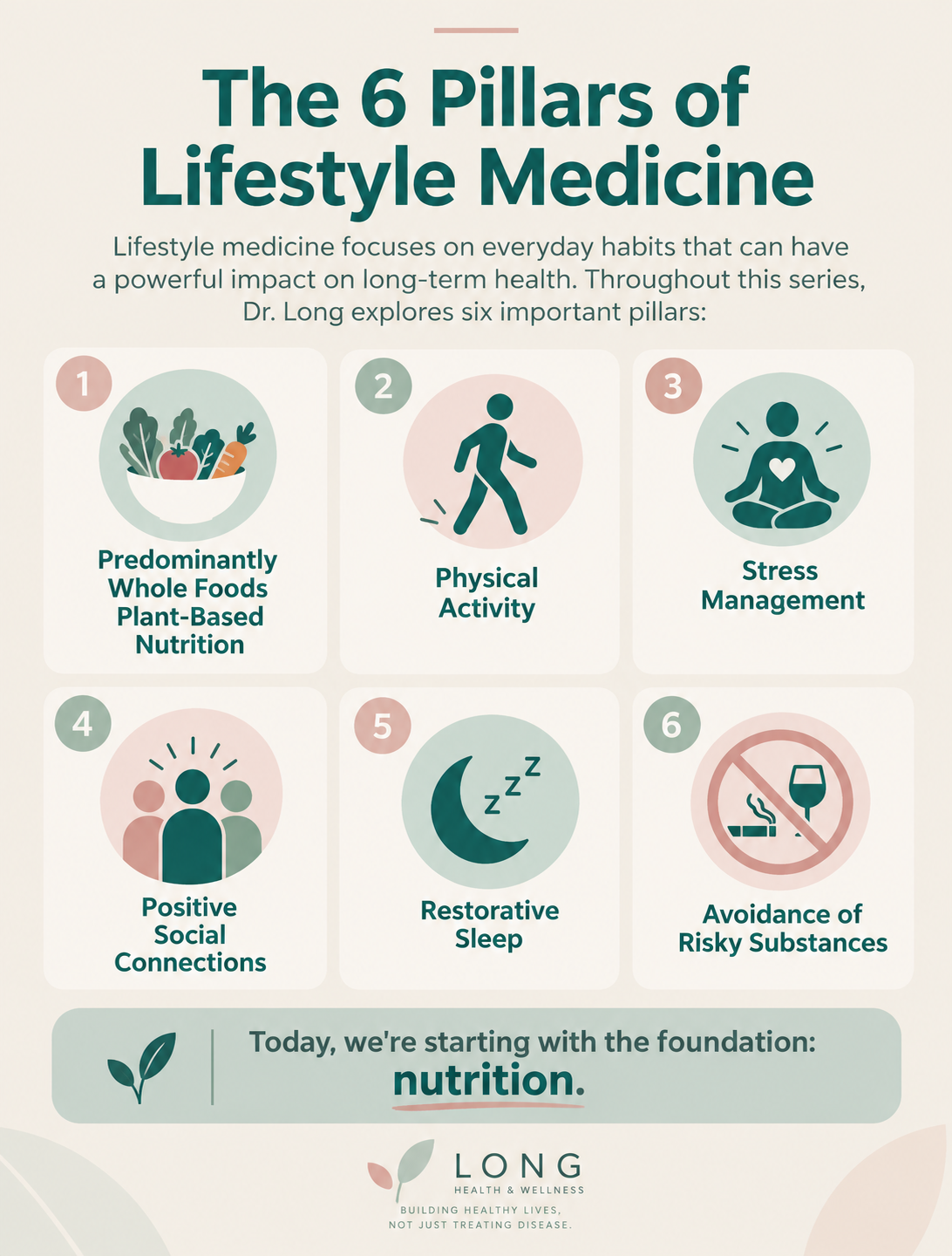
Welcome back to The Physician Gardener's Lifestyle Medicine Series, Dr. Kashiti Long explores Pillar #1: Nutrition and introduces the principles of a predominantly whole foods, plant-based approach to eating.
The goal isn't perfection.
It's about making small, sustainable choices that help you build a healthier life for the long run. 🌿
Watch the Full Episode
In this episode, Dr. Long explains what a whole foods plant-based diet is, why nutrition matters, and simple ways to start adding more nutrient-rich foods to your daily routine.
Important Medical Disclaimer
This content is for educational purposes only and is not a substitute for personalized medical advice. Dr. Long is a physician, but she is not your personal physician. Always consult your healthcare professional before making significant changes to your diet or health routine.
What Is a Whole Foods Plant-Based Diet?
A Whole Foods Plant-Based (WFPB) diet focuses primarily on plant foods in their most natural and minimally processed form.
That includes:
🥦 Vegetables
🍎 Fruits
🌾 Whole grains
🫘 Legumes (Beans and lentils)
🥜 Nuts and seeds
What Does "Whole Food" Mean?
Whole foods are generally foods that are as close to their natural state as possible.
Often, they're simple foods where the ingredient is the food.
Think:
Apple → Apple
Beans → Beans
Oats → Oats
The goal is to build more of your meals around recognizable, minimally processed foods.
Why Does Whole Foods Plant-Based Nutrition Matter?
The foods we eat can play an important role in supporting our overall health.
Research has shown that dietary patterns rich in vegetables, fruits, whole grains, legumes, nuts, and seeds are associated with improved cardiometabolic health and may help support the prevention and management of many chronic conditions.
These include:
Heart disease
Type 2 diabetes
High blood pressure
Stroke
Obesity
Metabolic syndrome
Fatty liver disease
That's why we often say:
Nutrition is one of the most powerful tools we have for supporting long-term health.
At Long Health & Wellness, we believe healthcare should go beyond simply treating disease. We focus on helping patients build healthier lives through sustainable lifestyle changes.
Whole Foods vs. Processed Foods: The Apple Example 🍎
One of the easiest ways to understand the difference between whole and processed foods is to follow the journey of an apple.
🍎 Apple
Closest to its natural form and naturally contains fiber.
🥣 Applesauce
More processed than a whole apple, but can still be a nutritious choice depending on how it's prepared.
🧃 Apple Juice
More processed and typically contains much less fiber than eating the whole fruit.
🍩 Apple Fritter
Highly processed and often higher in added sugars and fats.
The Goal: Stay closer to the whole-food end of the spectrum more often.
5 Whole Foods Plant-Based Staples to Add to Your Routine
You don't need to completely change your diet overnight.
Start by learning about the major food groups that form the foundation of a predominantly whole foods, plant-based eating pattern.
🌾 1. Choose More Whole Grains
Many people regularly eat refined grains such as white bread, white rice, and foods made with refined flour.
Instead, try incorporating more:
Whole grain bread / pasta
Whole wheat flour
whole grain flour
Brown rice
Wild rice
Black rice
Purple rice
Black or purple rice
Old-fashioned oats / rolled oats
Barley
Quinoa
Millet
Corn
Simple Swap
Instead of: White rice
Try: Brown or wild rice
Instead of: White bread
Try: 100% whole grain bread
Small substitutions can add up over time.
Serving Ideas
Examples of a serving may include:
½ cup cooked oats
½ cup cooked brown rice or wild rice
1 slice whole grain bread
1 cup whole grain pasta
Daily goal (general guidance mentioned): about 3–6 servings/day (varies by serving size)
🥦 2. Eat More Vegetables
Dr. Long has a simple mission:
More vegetables!
Many people believe they're eating plenty of vegetables—until they stop and count how often vegetables actually appear on their plate.
If you're currently eating very few vegetables, don't worry.
You don't have to suddenly start eating salads all day.
Try This Instead:
🥦 Try one new vegetable when you go grocery shopping.
🔥 Experiment with different cooking methods:
Roast
Sauté
Grill
Air-fry
Stir-fry
🌿 Add flavor with:
Herbs
Spices
Garlic
Onion
Pepper
Seasonings you enjoy
Serving sizes:
Cooked vegetables: about ½ cup
Leafy greens (raw): about 3 cups (because they shrink when cooked)
General goal: 4–6 servings of vegetables per day
Key point: If you boiled meat in plain water, you wouldn’t like it either—so don’t treat vegetables that way.
Remember:
Don't judge vegetables by the way they were served to you growing up.
Vegetables don't have to be plain, boiled, or boring.
🍓 3. Add More Color With Fruit
Fruit provides important nutrients, including:
Fiber
Vitamins
Minerals
Naturally occurring plant compounds
One simple strategy is to:
Eat the rainbow 🌈
Try incorporating a variety of colors into your meals.
🔴 Red: Tomatoes and strawberries
🟢 Green: Kiwi and green fruits
🟠 Orange/Yellow: Oranges, mangoes, bananas
🔵 Blue/Purple: Blueberries, blackberries, grapes
Easy Ways to Add Fruit:
Add berries to breakfast
Keep fruit available for snacks
Add fruit to smoothies
Use fruit as a naturally sweet dessert option
General goal: 2–4 servings of fruit per day
Serving examples:
½ cup berries
1 medium fruit = typically 1 serving (larger fruit may count as more)
Try This Challenge: Choose one new fruit to try this week.
🫘 4. Don't Forget About Beans and Lentils
Legumes are nutritional powerhouses.
They include:
Black beans
Kidney beans
Chickpeas
White beans
Lentils
Soybeans
Peanuts
Legumes provide a combination of:
✔ Fiber
✔ Plant protein
✔ Important vitamins and minerals
Easy Ways to Eat More Legumes:
Add beans to salads
Add lentils to soups
Make grain and bean bowls
Try hummus
Use beans as part of your main meal
General goal mentioned: 1–2 servings/day
Serving size: about ½ cup
Simple Start: Try adding beans or lentils to one meal this week.
🥜 5. Add Nuts and Seeds
Nuts and seeds can be a great addition to a healthy eating pattern.
Examples include:
Almonds
Walnuts
Cashews
Pecans
Brazil nuts
Chia seeds
Flax seeds
Hemp seeds
Pumpkin seeds
They can provide healthy fats, protein, and important minerals.
Easy Ways to Use Them:
Sprinkle seeds on oatmeal
Add nuts to salads
Mix chia seeds into yogurt
Add flaxseed to smoothies
Start With One Healthy Swap Per Day 🌿
You don't have to completely change your diet tomorrow.
In fact, trying to change everything at once can make healthy habits harder to maintain.
Instead, Dr. Long recommends starting with one small change.
Examples:
Instead of soda → Try water or sparkling water.
Instead of white bread → Try whole grain bread.
Instead of chips → Try fruit with nuts.
Instead of skipping vegetables → Add one vegetable to dinner.
The Goal Isn't Perfection: “One healthy choice. One day at a time”
Over time, those choices can become habits.
And habits can help build a healthier lifestyle.
Because nuts and seeds are energy-dense, portions can be smaller while still being satisfying.
The Bottom Line
A whole foods plant-based approach isn't about following a perfect diet.
It's about gradually building more meals around foods that support your health.
Start with:
🥦 More vegetables
🍓 More fruits
🌾 More whole grains
🫘 More beans and lentils
🥜 More nuts and seeds
Then build from there.
Small changes can lead to lasting habits.
And lasting habits are what help us build healthier lives for the long run. 🌿
Continue the Lifestyle Medicine Series
This is Pillar #1: Nutrition.
Throughout this series, Dr. Long explores the six pillars of lifestyle medicine and practical ways to support your health through everyday habits.
Coming Next:
🚶 Physical Activity
🧘 Stress Management
😴 Sleep
🤝 Social Connection
🚭 Avoidance of Risky Substances