
Series label: The Physician Gardener | Lifestyle Medicine Pillar 6: : How Meaningful Relationships Support Your Mental and Physical Health

Why Relationships Matter More Than You Think
When we think about healthy living, we often focus on what we eat, how much we move, and how well we sleep.
But there's another important part of our health that deserves just as much attention:
Our relationships.
As the final pillar in the Lifestyle Medicine Series on The Physician Gardener, I want to explore the role of positive social connection and why meaningful relationships matter for our mental, emotional, and physical well-being.
Social connection isn't about how many friends you have or how often you socialize. It's about having relationships in which you feel supported, valued, understood, and connected.
At Long Health & Wellness, we believe caring for the whole person means looking beyond lab results and diagnoses. It also means recognizing how our relationships, communities, and everyday environments can shape our health.
Whether it's a conversation with a trusted friend, time spent with family, or a sense of belonging in your community, meaningful connection can be an important part of a healthier, more fulfilling life.
Watch the Episode: Positive Social Connection
Prefer to watch or listen? In this episode of The Physician Gardener, Dr. Long explores why social connection is an important pillar of lifestyle medicine and shares how meaningful relationships can support our overall well-being.
Watch the full episode below.
Why Social Connection Is Essential for Your Health
When we talk about health, we often think about physical activity, nutrition, and preventive screenings. But our social connections also play an important role in our overall well-being.
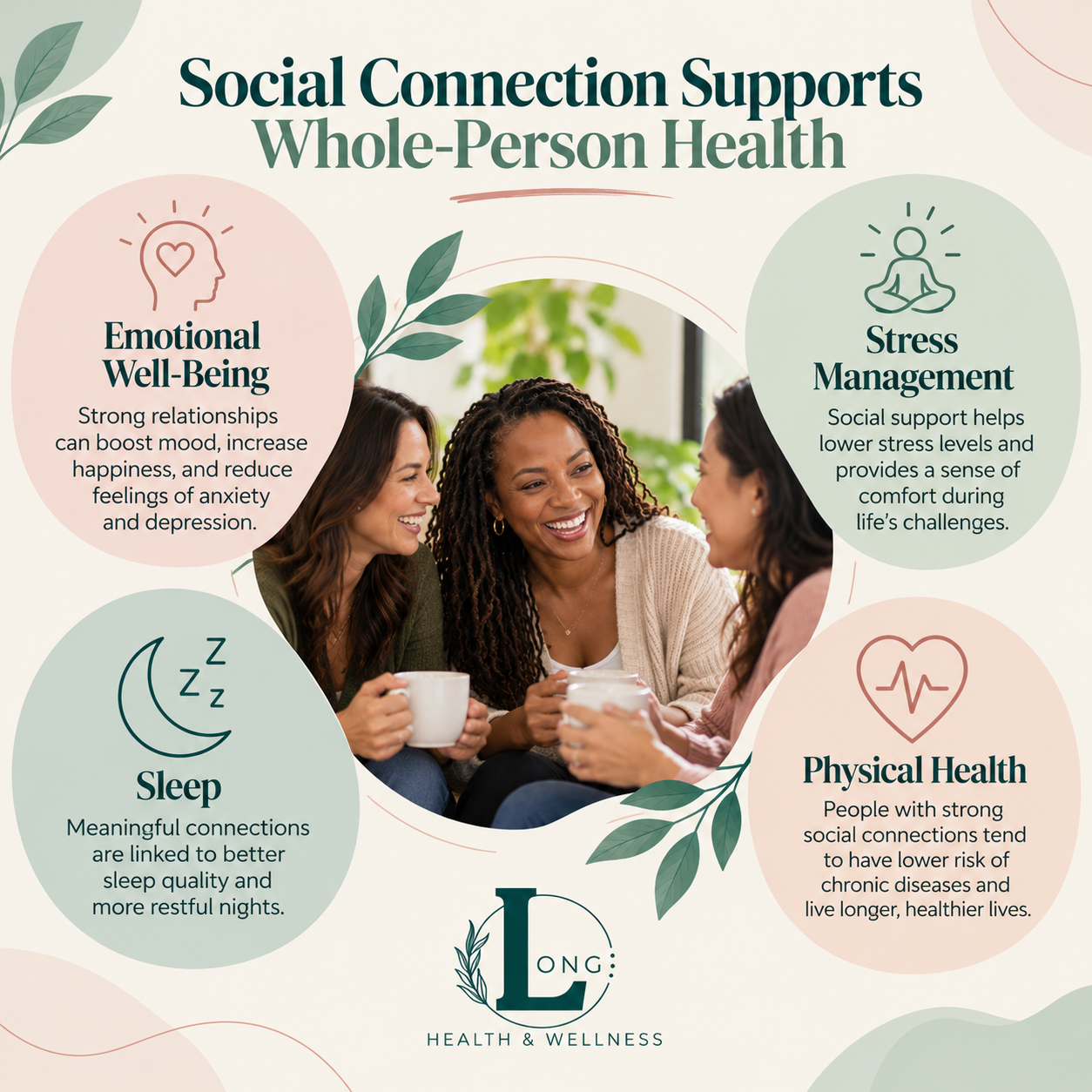
Research has linked social isolation and loneliness with a range of health concerns, including depression, cardiovascular disease, and an increased risk of premature death. Social disconnection can also affect stress, sleep, daily routines, and our ability to cope with life's challenges.
It's important to understand that social connection is only one part of a much bigger picture. Health is influenced by many interconnected factors, and meaningful relationships don't eliminate every health risk.
Still, having people we can turn to—and feeling that we belong—can make a meaningful difference in how we experience everyday life.
Positive social connection can help support:
Mental health: Feeling connected may help reduce loneliness and support emotional well-being.
Emotional resilience: Supportive relationships can help us navigate stressful experiences and difficult transitions.
Healthy habits: Friends, family, and community members can encourage routines that support our health.
A sense of belonging: Meaningful relationships can help us feel valued, understood, and connected to something larger than ourselves.
Overall well-being: Feeling supported can improve our quality of life and help us cope with life's challenges.
Social connection doesn't have to mean having a large group of friends. Sometimes, one trusted relationship can be a meaningful source of support.
How Social Isolation and Loneliness Can Affect the Body
Social connection affects more than how we feel emotionally. Our relationships can also influence how we respond to stress, maintain daily routines, and care for our health.
Social isolation refers to having limited social contact or support. Loneliness, on the other hand, is the feeling of being disconnected from the relationships or sense of belonging we want. A person can experience one without necessarily experiencing the other.
Research has linked social isolation and loneliness with several health concerns, including:
Stress: Limited social support may make stressful experiences harder to manage.
Sleep: Loneliness and social disconnection are associated with sleep difficulties.
Mental health: Social isolation and loneliness are associated with a higher risk of depression and anxiety.
Cardiovascular health: Research has linked social disconnection with an increased risk of heart disease and stroke.
Long-term well-being: Social isolation and loneliness are associated with other adverse health outcomes, including a higher risk of premature death.
These relationships are complex, and social disconnection is only one of many factors that influence health.
The important takeaway is that meaningful relationships can be a valuable source of emotional support, practical help, and belonging. When we care for our health, nurturing those connections deserves a place in the conversation, too.
How to Build Stronger Social Connections
If your social circle feels small or you've been feeling disconnected, know that meaningful connections can develop at any stage of life.
You don't need to transform your social life overnight. Start with what feels manageable, build on the relationships you already have, and look for opportunities to connect around shared interests or values.
Here are a few practical ways to nurture your social well-being.
1. Join Activities That Interest You
Shared interests can create natural opportunities to meet people and build relationships over time.
You might consider:
Book clubs or reading groups
Walking groups or community fitness activities
Gardening clubs
Recreational sports
Art, cooking, or music classes
Local library events or community workshops
Choose something you genuinely enjoy. When an activity is meaningful to you, it's often easier to keep showing up and gradually get to know others.
You don't need to make a new best friend at your first event. Simply becoming a familiar face can be a good beginning.
2. Find a Community Where You Feel You Belong
Connection doesn't have to begin with close friendship. Sometimes, it starts by becoming part of a community.
Consider exploring:
Neighborhood or community associations
Cultural or interest-based groups
Alumni associations
Professional or small-business organizations
Local classes, workshops, or discussion groups
Faith-based communities, if that's meaningful to you
Look for spaces where you feel comfortable being yourself and where participation fits your schedule and circumstances.
A sense of belonging can grow through small, repeated interactions—greeting a neighbor, talking with someone after a class, or showing up regularly to an activity you enjoy.
3. Volunteer for a Cause You Care About
Volunteering can give you opportunities to connect with others while contributing to something meaningful.
Depending on your interests and availability, you might:
Help at a local food bank
Mentor or support young people
Participate in neighborhood cleanups
Assist with community gardens
Support local nonprofit organizations
Contribute your skills to a cause you believe in
Volunteering isn't just about what you give. It can also create opportunities to develop a sense of purpose, work alongside others, and build connections through shared values.
Start with a commitment that feels realistic for your schedule. Even occasional participation can be a way to become more involved in your community.
4. Make Time for the People Who Matter to You
Building stronger social connections doesn't always mean meeting new people. Sometimes, it means giving more attention to relationships you already value.
You could:
Call or message a friend you haven't spoken with recently.
Arrange a simple meal or coffee with someone you trust.
Check in with a family member.
Take a walk with a friend.
Set aside a little time for an uninterrupted conversation.
Let someone know that you appreciate them.
Small, consistent gestures can help relationships grow. You don't need an elaborate plan or a special occasion to reach out.
5. Be Intentional About How You Use Social Media
Technology can help us stay in touch with loved ones, find supportive communities, and connect with people who share our interests. But scrolling through social media isn't always the same as feeling meaningfully connected.
Pay attention to how your online habits affect your mood and relationships.
If social media leaves you feeling drained or caught up in comparison, consider setting boundaries. You might put your phone away during conversations, limit time spent scrolling, or make room for activities that help you feel more present.
When possible, balance digital communication with other forms of connection, such as a phone call, a shared activity, or an in-person conversation.
The goal isn't to avoid technology altogether. It's to use it in ways that support—not crowd out—the relationships that matter to you.
6. Remember That Healthy Relationships Need Boundaries
Positive social connection isn't simply about being around other people. The quality of our relationships matters, too.
Healthy relationships should allow room for respect, trust, and appropriate boundaries. You should be able to express your needs, feel heard, and make choices that support your well-being.
If a relationship consistently leaves you feeling unsafe, controlled, or emotionally drained, it's okay to seek support and consider what boundaries may help protect your health.
Connection should help you feel supported—not require you to sacrifice your safety or well-being.
Positive Social Connection: A Pillar of Lifestyle Medicine
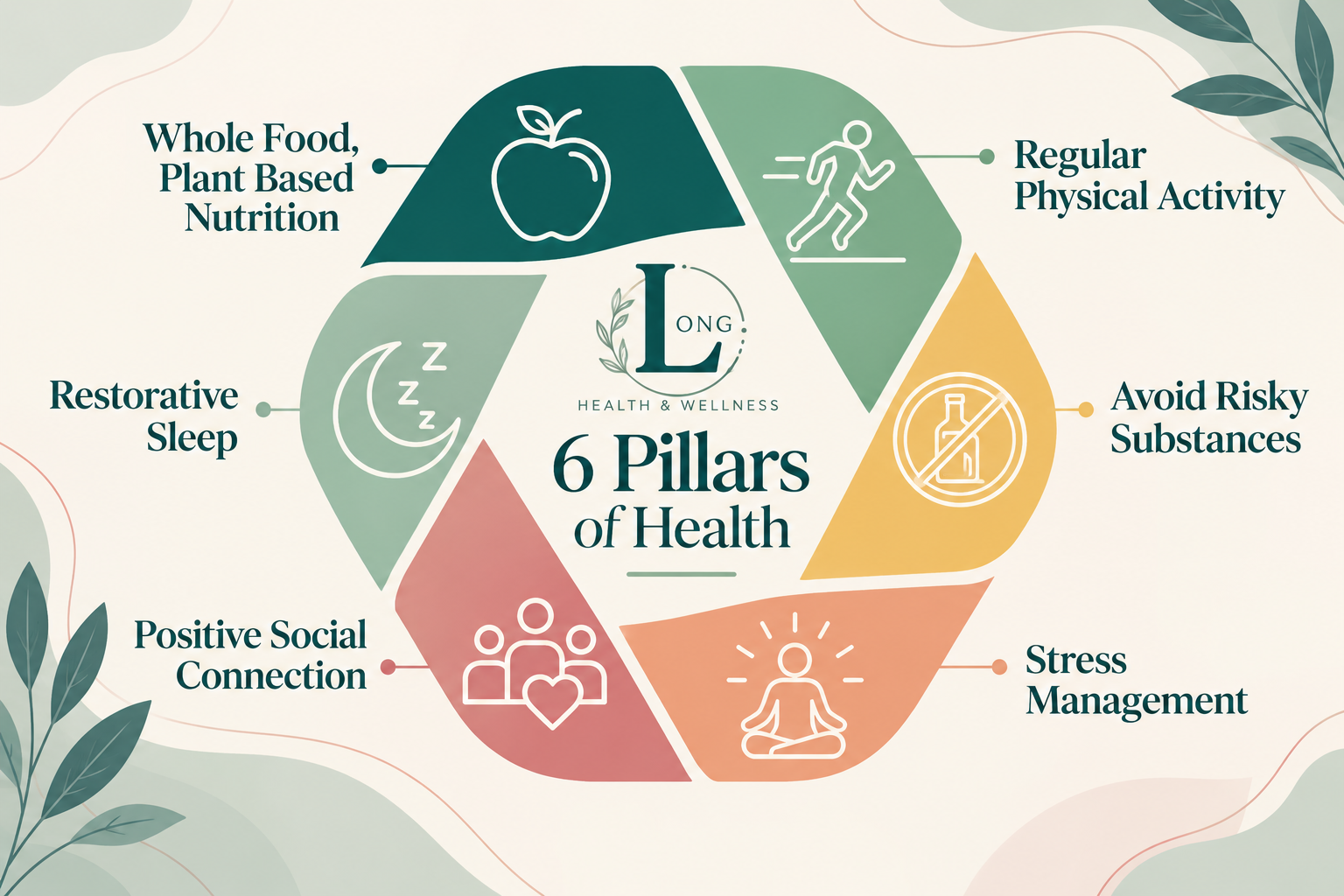
Positive social connection is the sixth pillar of lifestyle medicine. Alongside the other five pillars, it helps us look at health as more than an isolated symptom, diagnosis, or daily habit.
The six pillars are:
Nutrition: Nourishing your body with balanced, health-supporting foods.
Physical activity: Moving regularly in ways that fit your abilities and lifestyle.
Restorative sleep: Supporting your health through consistent, quality sleep.
Stress management: Developing healthy ways to respond to life's challenges.
Avoidance of risky substances: Understanding and reducing exposure to substances that can harm your health.
Positive social connection: Nurturing supportive relationships and a sense of belonging.
These pillars influence one another. Supportive relationships may help us manage stress, stay active, maintain healthy routines, and navigate difficult periods in life.
At Long Health & Wellness, we believe that caring for the whole person includes understanding the social and emotional factors that shape everyday health—not just the results of a lab test or the symptoms that bring someone into the office.
Your relationships are one part of your health worth nurturing, just like the habits that support your physical well-being.
The Six Pillars of Lifestyle Medicine
Take the First Step Toward Better Social Health
If you've been feeling disconnected, you don't have to change your entire social life overnight.
Start with one small step that feels manageable:
Reach out to someone you trust.
Make time for a conversation without distractions.
Explore a community activity that interests you.
Check in on someone who may appreciate hearing from you.
Spend time with people who help you feel supported and valued.
If making connections feels difficult right now, be patient with yourself. Life transitions, health challenges, caregiving responsibilities, and other circumstances can make socializing harder.
You can start where you are, with the time and resources available to you.
Meaningful connection doesn't have to be complicated. Sometimes, it begins with a simple hello.
The Bottom Line
Our relationships are an important part of our overall health. Meaningful social connections can provide emotional support, strengthen our sense of belonging, and help us navigate life's challenges.
You don't need a large social circle to experience the value of connection. What matters is building relationships that feel supportive, respectful, and meaningful to you.
As we complete the six pillars of lifestyle medicine, remember that health is about more than what we eat, how we move, or how well we sleep. It's also about the connections that help us feel supported and part of a community.
At Long Health & Wellness, we believe that caring for the whole person means recognizing the many factors that shape well-being—including the people and communities around us.
Wellness is built through community. Health is stronger when we feel supported.
Continue the Conversation
Watch the full episode of The Physician Gardener with Dr. Kashiti Long to learn more about positive social connection and its role in lifestyle medicine.
Have a question or a thought to share? Leave a comment below. We'd love to hear what helps you feel connected to your community.
Stay connected with Long Health & Wellness:
Subscribe to The Physician Gardener on YouTube.
Follow @ThePhysicianGardener on Instagram.
Explore more articles in our Lifestyle Medicine Series.
